
On 1 September, sprinklers across Perth switch back on.
The Winter Sprinkler Switch Off runs from 1 June to 31 August every year, and once it lifts, reticulation systems from Joondalup to Rockingham start running again on their two rostered days a week. If you park on the verge, in a driveway near a garden bed, or anywhere within range of a neighbour’s poorly aimed sprinkler head, your paint is could get hit with bore water on a regular schedule.
Here’s what actually keeps a coating performing, and what quietly destroys it.
Why Perth is harder on coatings than most cities
Two things make our conditions unusual.
The first is bore water. Perth sits on sandy soil with iron-rich groundwater, which is why bore water leaves those familiar orange-brown stains creeping across fences, letterboxes and brick walls all over the metro area. That same mineral load lands on your car. When a sprinkler mists your bonnet at 6:30am and the sun comes up an hour later, the water evaporates and the minerals stay behind.
On uncoated paint that’s bad enough. On a coated car it can be worse, because the coating is slick and hydrophobic, so water beads up into tight little domes instead of sheeting off. Each bead is a concentrated dot of mineral sitting on the surface. Cook that under a Perth summer sun and you get water spot etching, a ring pattern that has physically marked the coating itself.
We’ve seen cars where the spotting etched right through into metallic paint and needed machine polishing to correct. That’s a several-hundred-dollar job that started with a sprinkler.
The second factor is UV. Perth gets brutal, sustained sun. Ceramic coatings do provide UV resistance, but they’re a sacrificial layer, not a force field. The harder the sun works on the coating, the faster the top layer degrades, and a degraded coating loses its self-cleaning behaviour long before it looks like it’s failing.
What ceramic coating actually does for your car
Worth being clear about this, because expectations cause more disappointment than products do.
A coating makes your paint slicker and hydrophobic. Dirt struggles to bond to it. Water sheets off faster. Washing takes less effort and less contact, which means fewer swirl marks over the life of the car. It adds gloss and depth, and it resists UV, bird droppings and bug splatter far better than bare clear coat.
What it does not do is make your car self-cleaning or scratch-proof. It won’t stop a shopping trolley. It won’t stop bore water etching if you leave the residue baking on the paint for a fortnight. And it will not last its full rated life if you run it through an automatic wash every few weeks. Think of it as a very good raincoat. Excellent paint protection, still needs to be looked after.
The maintenance wash, step by step
The routine itself isn’t complicated. Most people get it wrong on products, not technique.
- Wash every one to two weeks. More often in summer, more often if you’re near the coast or parked under trees. The goal is to stop contamination bonding, not to wait until the car looks dirty.
- Always wash in shade, and never on hot panels. In Perth summer this usually means early morning or evening. Washing a hot car in direct sun causes water spotting while you’re still washing it, which is a special kind of frustrating.
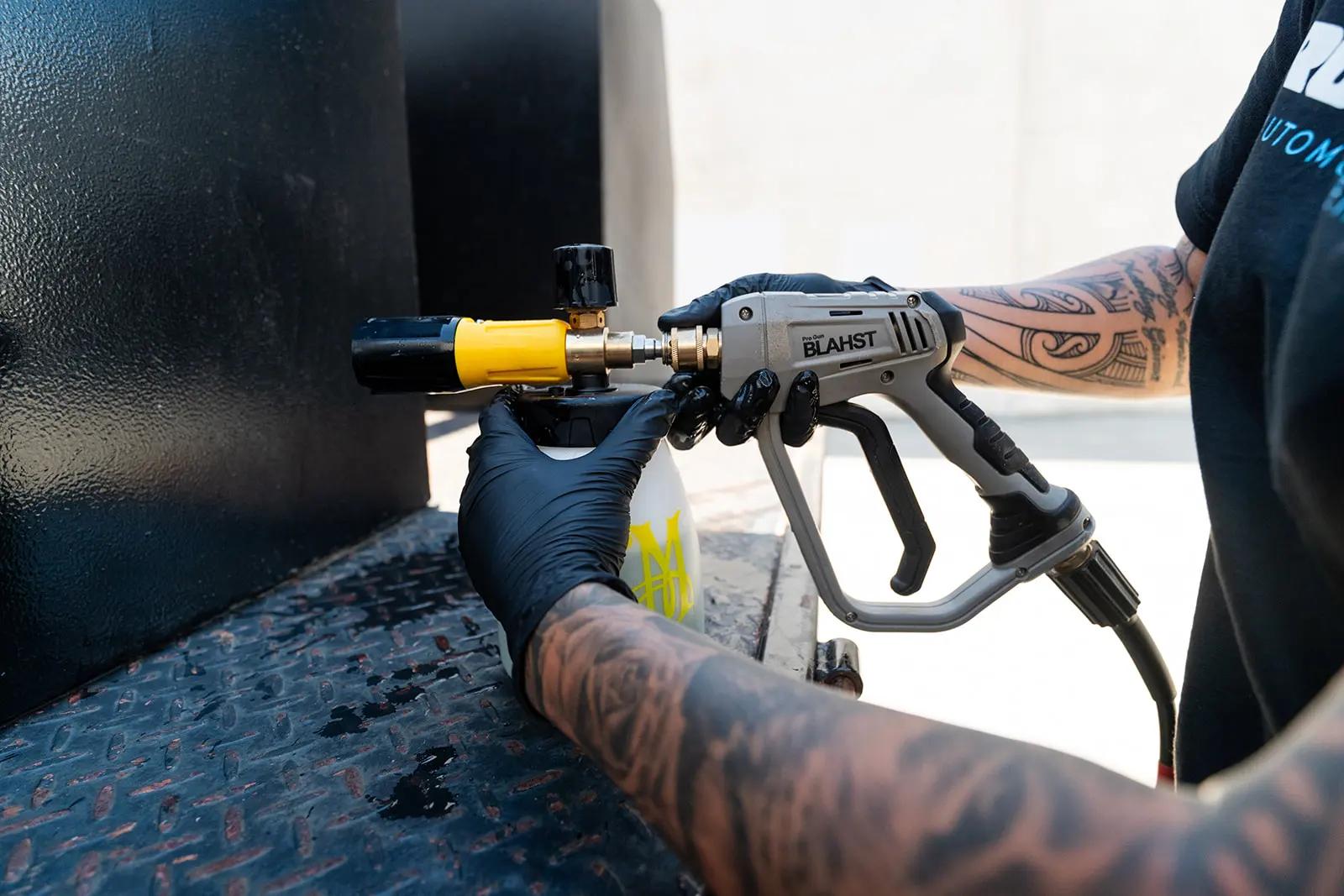
- Rinse thoroughly before you touch anything. Loose grit is what scratches paint. Get as much off as possible with water pressure first.
- Use a pH-neutral shampoo. This is the big one. Dish soap, degreasers, and anything labelled “wax and shine” will either strip your ceramic coating or smear a layer of product over the top of it, masking the hydrophobic properties you paid for. Buy a shampoo specifically made for coated cars.
- Two buckets. One with soap, one with clean rinse water. Wash a panel, then rinse the mitt in the clean bucket before it goes back into the soap. It sounds fussy. It is the single easiest way to avoid dragging grit across your paint.
- Straight lines, not circles. Top down, wheels last.
- Dry properly. Do not let a Perth breeze air-dry the car, that’s how you get spots. Use a plush microfibre drying towel or a blower. Skip the old chamois and definitely skip the bath towel.
- Deal with bird droppings and sap immediately. The coating buys you time, but not unlimited time. A quick rinse and a gentle wipe with a ceramic-safe detail spray is all it takes.
The bore water problem specifically
If reticulation regularly hits your car, a few things help.
Move the car if you can, even a couple of metres. Adjust or replace the sprinkler head causing the overspray. If your car has already been hit, rinse it as soon as you can and dry it properly rather than letting it sit. Fresh mineral deposits sitting on top of a coating usually come off with a normal car wash. Deposits that have baked on for weeks in February heat often won’t.
A word of caution on the internet advice here. You’ll find plenty of forum posts recommending vinegar. Diluted white vinegar can neutralise mineral deposits, and it does work on glass, but it’s acidic. Repeated use on a ceramic coated panel will shorten the coating’s life. Use it as a one-off on glass if you must, not as a routine on paint.
Top-ups and inspections
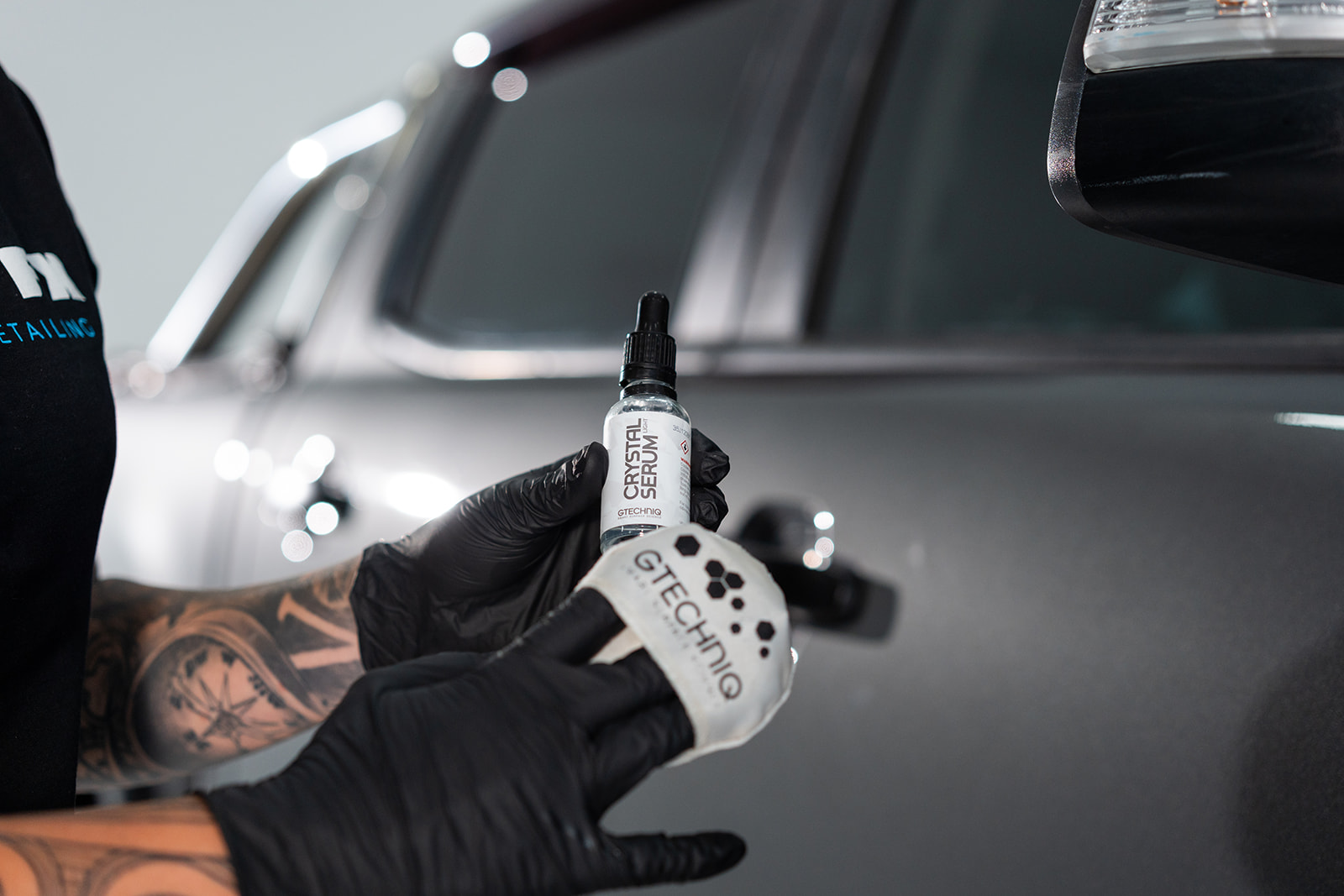
Between washes, a ceramic-safe booster spray or SiO2 topper refreshes the hydrophobic behaviour. Applied every couple of months, it adds a thin sacrificial layer that takes the daily abuse instead of your base coating. It takes about ten minutes and it noticeably brings the water beading back.
Every three to six months, do a deeper check. Wash, then run your hand over the paint in a plastic bag. If it feels gritty, you’ve got bonded contamination. The coating can’t shed on its own, and it needs a decontamination wash or a clay treatment.
If your coating came with a warranty, check the terms. Many require a professional inspection at set intervals, and skipping it can void the cover. That’s not fine print designed to trap you, clogged coatings genuinely stop performing, and a proper decontamination and re-boost restores most of it.
The five things that kill coatings early
- Automatic and brush car washes. Harsh chemicals and spinning brushes. Nothing undoes a coating faster.
- Wax on top. It masks the coating and does nothing useful. If a hand wash place offers to wax your coated car, decline.
- Washing in full sun on a hot panel.
- Letting contamination sit. Sap, droppings and bore water are all time-sensitive.
- Aggressive drying. Rubbing hard at a dry panel with a rough towel will mar the coating surface.
When to bring in a professional
If the water isn’t beading the way it used to, the gloss has flattened, or you can see spotting that survives a wash, the coating needs attention rather than another wash.
That usually means a decontamination wash, a light polish on affected areas, and a fresh top-up layer. Done at the right time it’s straightforward maintenance. Left for another twelve months, it becomes paint correction.
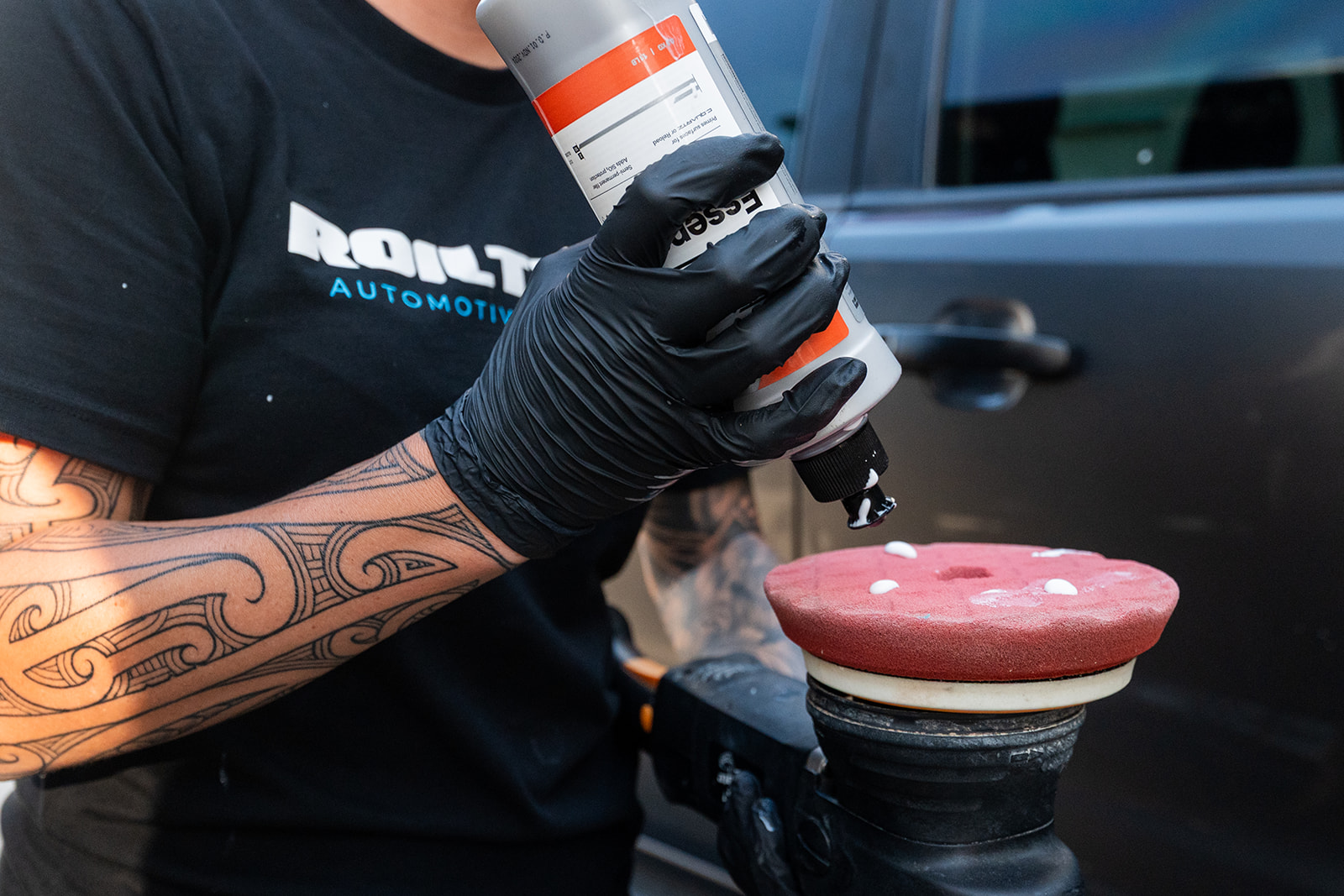
At Roilty FX we come to your home or workplace, anywhere across the Perth metro. If you’re not sure whether your coating is failing or just needs a proper clean, send us a photo and we’ll tell you honestly which one it is. We’d rather do a maintenance wash now than a full correction later, and so would your wallet.
Book a ceramic coating maintenance visit or get a quote today.